


Consigne de faire bouillir l’eau : causes, risques et solutions. Comprenez quand et pourquoi ces recommandations sont émises et comment réagir.
Your Cart
(0 products)
Your cart is empty
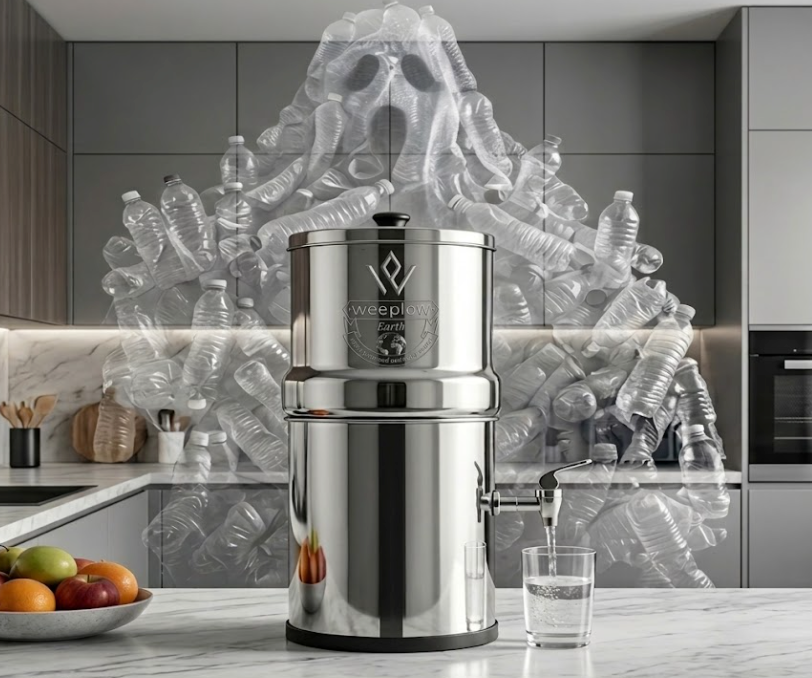
Each year, a French household spends hundreds of euros on bottled water. It is carried home from the supermarket, stored in the kitchen, reassured by the image of mountains on the label. It seems pure. Healthy. Worth the money.
Yet the reality is often different. And on Earth Day, it is fair to ask: why do we keep doing this?
The shelf price of a litre of bottled water may seem low. Yet when you consider its full life cycle — extraction, packaging manufacture, transport, chilled storage and waste management — the real cost looks very different.
Some of this plastic is recycled. But much of it is not. Even when it enters a recycling stream, plastic does not disappear. Over time, it breaks down into smaller and smaller particles that are harder to remove.
A plastic bottle does not only create waste once discarded. Researchers have also detected microplastic particles directly in bottled water — released from the bottle itself, the cap and the filling process. A 2018 study found an average of 325 microplastic particles per litre in bottled waters from major global brands.
The regulatory landscape is evolving. The US FDA has recently classified microplastics and pharmaceutical residues among priority contaminant groups, identifying them as hazardous substances in drinking water. It is a significant development that reflects the direction of science and regulation. European authorities may follow.
The precautionary principle is simple: why add microplastics to your water when you can avoid them?
This often surprises people: in France, tap water is one of the most closely monitored food products available. It undergoes hundreds of quality checks every year. In the vast majority of cases, it complies with all current health standards.
There are nuances, however. Older buildings fitted with lead pipework may release metals at the point of use. Some agricultural regions — particularly Brittany, Normandy and the Loire Valley — can show higher nitrate levels, which may occasionally exceed regulatory thresholds in certain areas. Chlorine treatment, while effective and safe, may also affect taste and create traces of disinfection by-products.
None of these situations automatically justify switching to bottled water. They are more often reasons to filter your water.
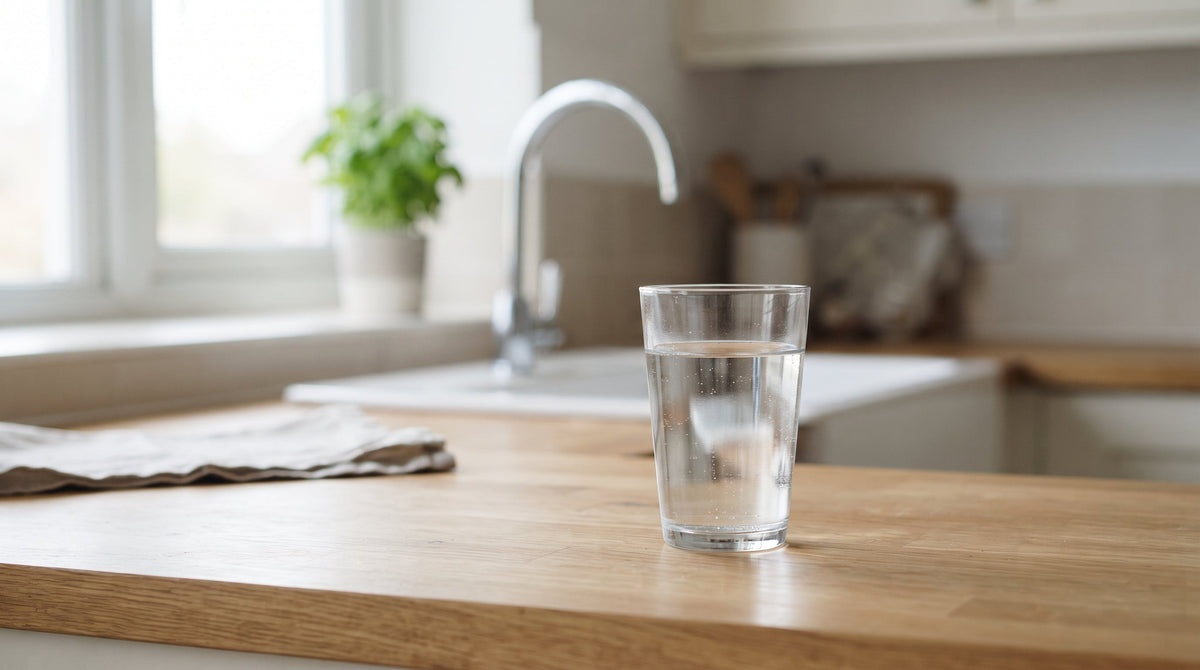
Between drinking tap water as it is and buying bottled water, there is a third option that is too often ignored: filtered tap water.
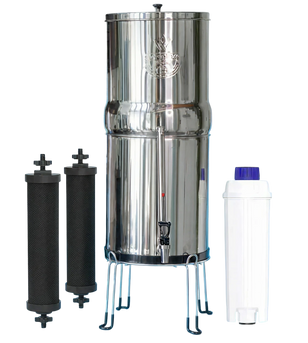
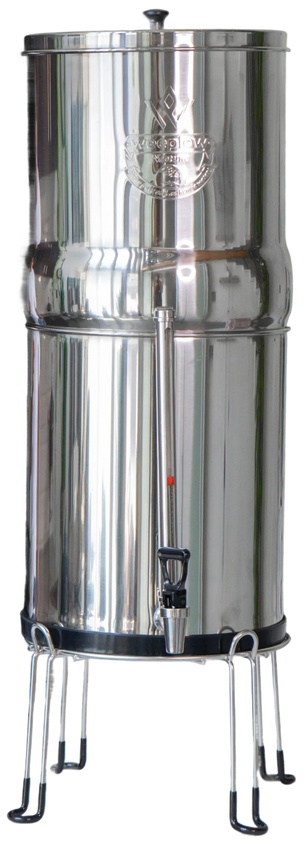
Activated carbon filtration systems, especially gravity filters, can remove chlorine, reduce heavy metals and improve taste — at a fraction of the cost of bottled water and with a far lower environmental footprint. A good gravity filter can produce clean, pleasant-tasting water for around €0.02 to €0.10 per litre, without creating plastic waste apart from the filter cartridge itself.
Gravity filters in particular require no electricity, no complicated installation and no subscription. You simply fill the upper chamber: gravity does the rest, and filtered water collects below. The principle has been used for centuries; the technology has simply improved over time.
If you are reading this around Earth Day, try a simple exercise. Count how many bottles of water your household buys in an average week. Multiply that by 52. Then multiply by the unit price. You will see your yearly bottled water spend.
Now compare that figure with the cost of filtered tap water. The result is often eye-opening.
Consigne de faire bouillir l’eau : causes, risques et solutions. Comprenez quand et pourquoi ces recommandations sont émises et comment réagir.
Les nitrates dans l’eau du robinet sont fréquents mais invisibles. Découvrez leur origine, les risques potentiels et les solutions pour mieux comprendre votre eau au quotidien.
Les nitrates sont difficiles à détecter sans analyse. Découvrez comment ils se retrouvent dans l’eau du robinet, pourquoi ils sont surveillés et comment tester votre eau simplement.
Les nitrates peuvent être présents naturellement dans l’eau, mais certaines activités, notamment agricoles, peuvent augmenter leur concentration. Découvrez la limite applicable en France, comment v...
Nitrat kommt natürlich in Böden, Pflanzen und Wasser vor. Erhöhte Konzentrationen können jedoch insbesondere im Grundwasser auftreten. Erfahren Sie, wie der Nitratgrenzwert in Deutschland geregelt ...